
Defending a dignified life for young people
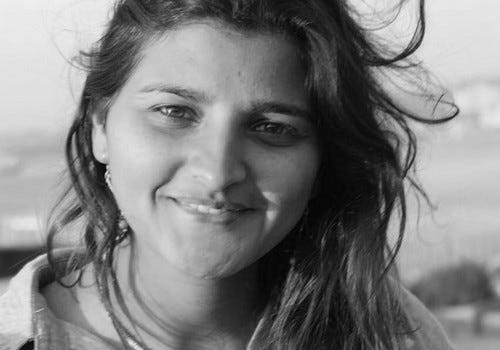
In an interview with France Huart from the Belgian magazine, Revue Démocratie, International YCW president Basma Mikhail explains the challenges facing young workers today.
What are the forms of precariousness affecting young people today?
Today’s young people face multiple and growing precariousness. This manifests itself in economic insecurity—unstable employment, unemployment, informal or underpaid work—as well as limited access to housing, education, and quality healthcare.
Young workers are particularly exposed to extreme forms of precariousness. Many of them work in the “gig economy”—a “gig economy” in which jobs are flexible and precarious—as delivery drivers, drivers, or digital freelancers. They are often considered “independent,” but lack any real social protection: no stable contract, no health insurance, and no pension. These young people sometimes work in very difficult conditions: long hours, unpredictable pay, algorithmic pressure, isolation, and the inability to assert their rights. They must constantly be “available” to earn a minimum income, while assuming the risks associated with their work.
This precariousness has a profound psychological impact. Permanent instability leads to increased stress, anxiety, and depression, and this unfortunately translates into a rising suicide rate among young people in many countries. The climate crisis further exacerbates this insecurity. Environmental degradation and political inaction in the face of this emergency are fueling a sense of helplessness and despair among young people about the future.
Furthermore, the rise of far-right ideologies and authoritarian policies is fueling a deep disillusionment with the system. Many young people are losing trust in institutions, which they perceive as distant from their realities and aspirations. In response, some are taking refuge in social media, creating a virtual bubble that can reinforce isolation and withdrawal.
How does the JOC adapt its work to these new forms of precariousness?
The JOC acts by offering these young workers a space where they can express their experiences, analyse their situation, and collectively construct responses, as recommended by the “See, Judge, Act” method 1 . We also work to create safe, offline spaces where young people can express themselves freely and organize collectively. In terms of mental health, we offer psychological support and resilience tools. Finally, in order to combat isolation and misinformation, we carry out extensive media education and critical thinking work.
Is the “See, Judge, Act” method still valid in the face of current challenges?
I sincerely believe so. If we aim for systemic change in society, this method is essential. It can be adapted in different ways to match the current characteristics of young people, without losing its essence. It allows young people to understand their realities, take action, and create lasting transformation in their lives and the world around them.
The method begins with SEEING: we analyze our situation from all angles. We examine the causes and consequences of our struggles through social, political, economic, and cultural analysis. This allows us to have a deeper and more complete understanding of our reality. Then, we move on to JUDGING: here, we reflect on how we feel about the situation, how to improve it and strive for our ideal, and how our values and principles guide us in this analysis. Finally, we ACT. This is the crucial part where we reflect on what actions we can take, individually and collectively, to transform our living conditions.
It’s not just about understanding the problem, but also about taking responsibility for transforming our conditions. Through this method, individuals move from passive actors to agents of change in society.
How do you integrate the climate issue into your struggles?
Within the IYCW, climate and ecology are central to our work. The impact of environmental change is already changing the world of work, and as workers, we understand that the ecological crisis directly impacts our lives, our livelihoods, and threatens our future. It is the most vulnerable communities—precarious workers, migrants, etc.—who are often the most affected by environmental degradation.
For the IYCW, ecology is not only an environmental issue, but also a social justice issue. We link climate change to issues of inequality, exploitation, and workers’ rights.
The IYCW is actively involved in raising awareness and taking action on this issue around the world. For example, in the JOCA (YCW of the Americas) movements of Chile and Peru, the issue of climate justice is central to their work. At the regional level in Asia-Pacific, climate justice is one of their main campaigns. In 2024, a regional seminar was held, bringing together national movements from across Asia, during which issues of climate justice and social protection were addressed in depth.
Moreover, in many movements, even if specific actions do not directly focus on climate issues, a strong emphasis is placed on education and training on these environmental issues. The IYCW is committed to ensuring that its members are not only aware of these issues, but also actively involved in promoting climate justice and advocating for policies that protect both the environment and workers’ rights.
As part of our centenary celebration on May 2, we are organizing a public forum that addresses the theme of action and collaboration for a just transition for social and climate justice. This event involves the MOC, ACV, and other partners, who are bringing their perspectives and contributions to this important exchange.
Women’s rights are also at the heart of your work. Can you tell us more?
Yes, young women are one of the most vulnerable groups in today’s society. In many countries, they continue to experience violence and discrimination. This dehumanization is deeply rooted in social structures and, unfortunately, in the way some women perceive themselves. This internalized oppression is one of the most difficult challenges to address.
At the IYCW, we are committed to raising awareness about these issues and ensuring that they are addressed at the national and international levels. We have a Gender Commission at the international level, which plays a key role in organizing webinars and creating educational tools to raise awareness among our members about these gender-specific issues.
Furthermore, the IYCW has developed basic gender tools, which are used in the training of our members to help them understand gender equality, combat violence, and promote a more equitable society. This ensures that the issue of gender equality is not just a rhetorical discussion, but is a cross-cutting issue in our work at all levels of the movement.
You have developed a protocol for protecting women at all levels of your organization. Can you explain it to us?
Of course. This work is being led by a dedicated commission, including members from Latin America. The goal is to create an international framework that reflects our values of equality, dignity, and security for all women involved in our movement.
Although the protocol is defined at the international level, it is designed to be adapted by each national movement, according to its local reality and laws. We believe it is essential that national movements take ownership of this tool to make it truly effective and applicable in their context.
This protocol aims to establish clear standards and concrete mechanisms to prevent gender-based violence, support victims, and promote a safe and respectful environment. It will also include awareness-raising and training components around gender-based violence and discrimination.
We hope that this protocol serves not only our own movement but also inspires other youth and workers’ organizations. It reflects our commitment to profound structural change and our conviction that social transformation begins with consistency between our values and internal practices.
In 2025, for the centenary of the IYCW, you have chosen to launch a campaign focusing on precarious work and social injustice. Why these themes?
We chose these themes because we understood that precarious work is a kind of “umbrella” that encompasses many of the realities experienced by young people today. But precarity is not limited to work: it also affects education, housing, health, mental well-being, and more.
That is why we are not only demanding decent work, but a dignified life for young people. It is essential that young workers feel valued, regardless of their job. Respect, dignity, and recognition must be at the heart of the professional experience. Work should not be a source of anxiety or fear, but rather a source of stability, identity, and pride.
To develop this campaign, we will organize a series of webinars in October and November 2025 that will address precarious work across different global realities. At the same time, we are working to update our existing analyses of precarious work in each continent. This will allow us to adapt our demands to the current reality and develop our strategy based on the concrete experience of young workers. We will also pay special attention to workers in the platform economy, as their struggles are closely linked to the general discussions planned for the International Labour Conference (ILC).
We believe it is essential to provide concrete testimonies and clear proposals so that our final declaration reflects lived realities and urgent needs. Our demands will focus on access to stable and fair employment, social protection, workers’ rights, mental health, and the recognition of all forms of work, including informal work and work carried out on digital platforms.
Through this campaign, we aim to raise awareness, mobilize young people, and influence policies, both internationally and by encouraging national movements to take ownership of these struggles locally.
How does the centenary help us better understand the historical impact of the JOCI on the lives of young people and on society?
The centenary is not simply a celebration; it is a living process that allows us to reflect, reconnect, and look to the future. It is an opportunity to measure the historical impact of the IYCW, not only as an organization, but as a movement that has transformed lives and influenced entire societies.
As soon as the centenary opened on 12 April, we began publishing testimonies from young and former members, as well as from our partners and networks. These stories—shared on our social media—provide a concrete illustration of how the IYCW has empowered young people, promoted social change, and fought against injustice, across generations and continents.
As part of the centenary, we invite national movements to organize exchanges between young and former members to strengthen the connection between our history and our present. These intergenerational gatherings build a bridge between generations—a way to learn from the past while preparing for current and future struggles.
This allows us to strengthen our movement and renew our commitment through shared memory and collective action. This dialogue is not symbolic—it is strategic. It allows us to deepen our analysis and action based on concrete stories. This centenary helps us remember who we are, recognize our collective strength, and renew our commitment to a dignified life for all. It also shows us that the IYCW is a force of resistance in the face of threats to people and the planet.
SOURCE IN ORIGINAL FRENCH
«Nous défendons un travail décent et une vie digne pour les jeunes» (Revue Démocratie)